Fowl Typhoid
Fowl Typhoid (F T) is an economically important egg
transmitted/hatchery borne infection, causing high early mortality in chicks and
drop in egg production and mortality among adult flocks resulting in severe
economic losses.
Etiology
Salmonella gallinarum belongs to enterobacteriaceae family and is a
potential pathogen of poultry.
Trasmission
Horizontal and vertical transmission is very common. The infected birds
become carriers and are the most important means of perpetuation and
spread. Chronic carriers of poultry cause severe outbreaks of FT among
chicks.
Incubation Period
Incubation period is 4-5 days. The course of the disease is about 5 days
or more. In a flock the losses may extend over 2-3 weeks with a tendency for
recurrence.
Clinical Signs
Chicks: Moribund and dead chicks may be seen in the hatching trays
during the hatch. Infected chicks show somnolence, poor growth, weakness,
inappetence and adherence of whitish material to the vent. Labored breathing
or gasping may be noted as a result of lung involvement.
Growers and Adult Birds
An acute outbreak cause sudden drop in feed consumption, droopy,
ruffled feathers and pale heads and shrunken combs. Death may occur within 4
days after exposure but usually in 5-10 days.
Mortality and Morbidity
In adult birds mortality varies from 10 to 50% or more while in chicks it
may be up to 90% within 16-20 days.
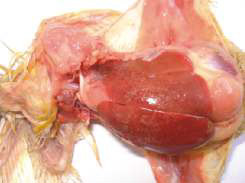
Liver Lesions: Liver is swollen, friable. It is dark red or almost
black in colour. The surface has a distinctive coppery bronze sheen
(shine) after exposure to the air for a short period.


